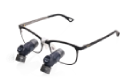
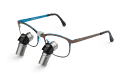
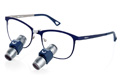
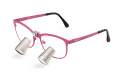


The Complete, Unfiltered Guide
Find the light style that actually fits the way you work.
Some people go into purchasing lights already knowing their preference — whether they're a wired or wireless kind of person. This guide is not for them. It's for those people who acknowledge that both options are good ones, both have their pros and cons, and are having a hard time deciding between the two.
This guide has no marketing fluff, no spec sheets thrown at you without context — just a real, honest breakdown of what it's actually like to work with each type, who tends to gravitate toward each, and the genuine pros and cons that nobody talks about.
By the end, you'll know which type fits your working style — not because we told you, but because you'll recognize yourself in one of these descriptions.
The Fundamental Rule: Wired Will Always Win on Specs
Let's get the big one out of the way first.
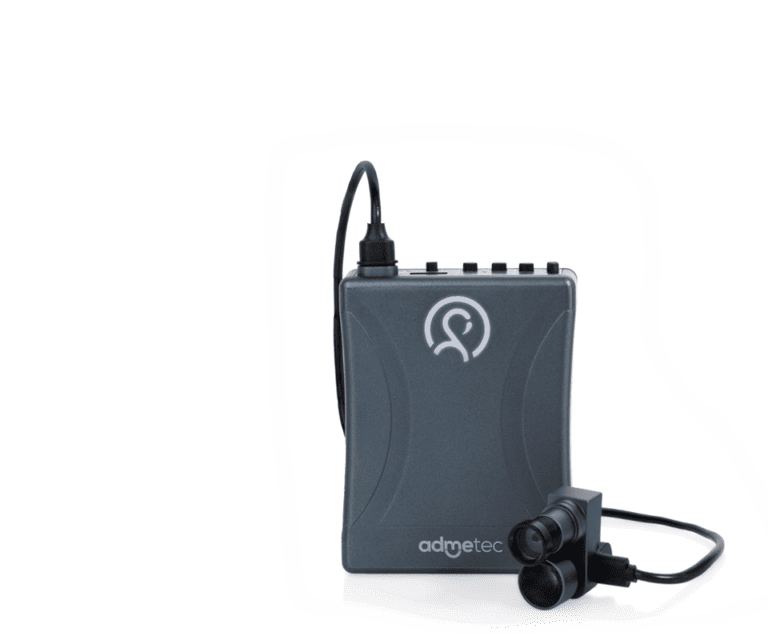
Within any given brand, a wired light will almost always outperform its wireless counterpart in raw specifications. That means more lux, longer battery life, and lighter weight on the nose bridge. That's not marketing — it's physics. When you run a cable to an external power source, you free the headpiece from carrying its own battery, which means less weight on the head and a bigger battery pack stored elsewhere on your body.
This is a consistent rule across the industry. If you line up every wired and wireless model from any manufacturer side by side, the wired option will have the edge in power and endurance.
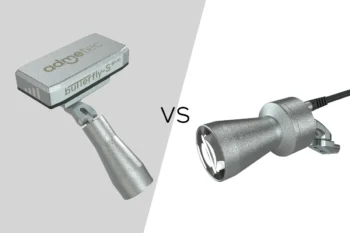
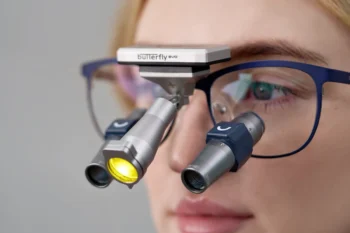
That said, there are exceptions. The Butterfly Evo+, for example, is a wireless light that actually outperforms most wired competitors from other brands in sheer output. So while wired wins within the same brand, the gap is narrowing — and in some cross-brand comparisons, wireless has already caught up.
Who Gravitates Toward Wired Light
If you find yourself nodding along to any of these descriptions, you might be a wired person.
The Marathon Practitioner
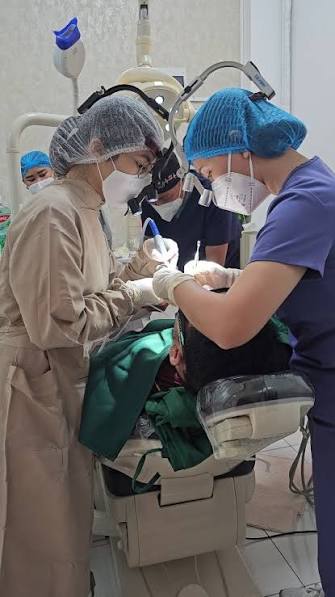
You have long, consecutive operating hours. Your procedures regularly stretch beyond two or three hours, and the last thing you want is to pause mid-procedure to swap a battery. With a wired setup, you're looking at minimum six hours of continuous runtime — enough to get through even the longest cases without thinking about power.
The Weight-Sensitive Practitioner

Every gram matters to you. Maybe you've had neck or nose bridge discomfort in the past, or you simply prefer the lightest possible setup on your face. Because the battery pack sits in your pocket or on your belt rather than on your head, the wired headpiece is noticeably lighter — often just 10–11 grams on the frame. Over an eight-hour day, that difference adds up.
The Maximum Intensity Practitioner

Some practitioners and procedures simply need more lux. Whether it's the nature of the clinical work, personal preference for a brighter field, or specific visual demands — if maximum light output is your top priority, wired lights deliver the highest numbers available within any brand's lineup.
Why Wireless Wins the Usability War
Here's the thing — while wired will always win the spec war, wireless will always win the usability and freedom-of-work war. And for a lot of practitioners, that trade-off isn't even close.
No Wires. Period.
This is the most obvious point, but it's worth saying plainly: some people simply hate the feeling of a wire running next to their neck, down their back, clipped to their clothing. It's not a dealbreaker for everyone, but for those who notice it, it's a constant low-level annoyance.
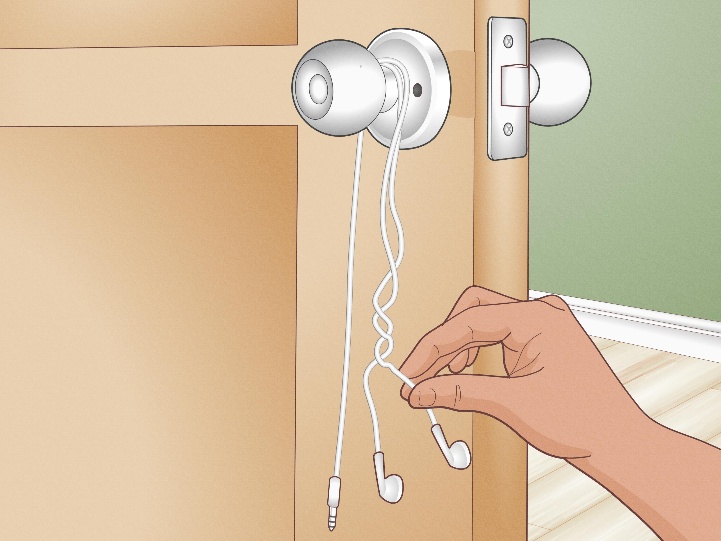
And it's not just about comfort. Wires get caught — on drawer handles, on instrument trays, on your own hand movements and equipment. You reach for something and feel that tug. You turn too quickly and the cable pulls at your loupes. With a wireless light, this entire category of frustration simply doesn't exist.
Accessible Controls — No Assistant Required
Here's something people don't think about until they experience it. With a wired light, your power pack is typically positioned on a sturdy location — in a pocket, clipped to a belt — because it's heavy enough that it needs to be secured. That sounds fine until you're gowned up.

In surgical robes, general clinical robes, or certain scrub configurations, that belt pack can become completely inaccessible. Need to change the intensity? You're either fumbling under layers of fabric yourself, or asking an assistant to reach into your clothing and personal space to operate the light for you.
With wireless, the battery and controller sit right on the headpiece — on your head, within easy reach. You can change the battery or adjust the intensity yourself without asking anyone to intrude on your personal space. Working solo? You're fully self-sufficient. Working with an assistant? They can swap a battery or adjust settings without the awkwardness of reaching into your clothing.
Headwear and Hair Compatibility

This one matters more than most guides acknowledge. A wired cable needs to run from the loupes frame down to the power pack, and that path goes right through whatever is on your head.
If you wear a religious head covering — routing a wire underneath or around it is sometimes awkward. If you have curly or voluminous hair, the wire can get tangled or annoying. And if you wear a surgical headscarf or cap, you're now managing both the headwear and the cable routing simultaneously.
With wireless, none of this is an issue. The light sits on the loupes frame, the battery clicks into place, and your headwear and hair stay undisturbed.
Setup and Teardown: The Daily Time Tax
This is the one that wired users don't talk about enough — because you get used to it, but that doesn't mean it isn't there.
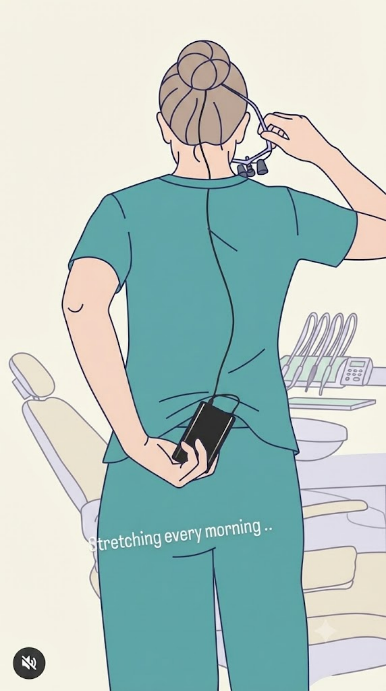
With a wired light, your setup routine looks something like this: take the loupes out of the case, uncoil the wire, route it through or under your clothing, connect the cable to the power pack, secure the power pack to your belt or pocket, and adjust everything so it sits comfortably. At the end of the procedure, you reverse the entire process — disconnect, unroute, carefully coil the wire back into the case so it doesn't tangle.
Now multiply that by every transition in your day. Before your first patient. Before and after lunch. Maybe between patients if you leave the operatory. At the end of the day. Each cycle takes a little time, but across a full day — especially in a busy practice — it adds up to real time and real annoyance.
With wireless? You take the loupes out of the case, snap on the battery, and start working. Done for now? Set them down. Done for the day? Put them back in the case and go home. The entire setup-and-teardown ritual simply vanishes.
Who Gravitates Toward Wireless Light
If any of these resonate, wireless might be your natural fit.
The "I Hate Wires" Person
You know who you are. Wires bother you — not catastrophically, just persistently. They get in the way, they catch on things, and you'd rather just not deal with them. That's a perfectly valid reason to go wireless.
The Quick-Setup Person
You value efficiency in your routine. The idea of spending time routing cables and coiling wires when you could just snap a battery on and go feels like unnecessary overhead. You want to walk in, start working, and not think about your equipment.
The Headwear/Hair Person
Whether it's religious head coverings, surgical caps, or natural curly hair that doesn't play well with cables — you need a light system that works around what's on your head, not the other way around.
The Accessibility Person
You want to reach your light controls and battery at any moment, without fumbling under a gown or asking for help. You value independence in your workflow, and you want your light system to support that rather than complicate it.
The Freedom-of-Movement Person
You move around a lot during procedures. You reach, turn, adjust your position — and you don't want to feel a cable influencing or restricting any of those movements. Wireless gives you complete freedom of motion.
The Honest Summary
| Wired | Wireless | |
|---|---|---|
| Light Intensity (Lux) | Higher — typically the strongest within any brand lineup | Lower — but the gap is narrowing; some wireless lights now rival competitors' wired options |
| Battery Life | Longer — around 6 hours continuous at max power | Shorter — around 2 hours per battery; quick-swap keeps you running |
| Weight on Nose Bridge | Lighter — battery sits on your body, not your head | Heavier — the battery is part of the headpiece, adding some weight |
| Freedom of Movement | Restricted — wire connects you to the belt/pocket pack | Unrestricted — no cable, complete freedom |
| Setup / Teardown Time | Longer — routing, connecting, coiling wire each time | Instant — snap battery on, start working |
| Wire Snagging | Yes — drawer handles, equipment, hand movements | Not applicable |
| Controls Accessibility | Limited when gowned — belt pack may be unreachable | Always accessible — controls are on the headpiece |
| Headwear Compatibility | Can be problematic/annoying | Fully compatible — no wire to route |
| Assistant Interaction | Assistant may need to access your clothing to operate the light | Assistant can easily reach headpiece controls from behind |
| Best For | Marathon procedures, weight-sensitive clinicians, max intensity needs | Quick setups, freedom of movement, headwear wearers, accessibility-focused clinicians |
Still Can't Decide?
That's completely fine — this is a personal decision, and sometimes you need a nudge in the right direction. Here's how we can help:
A quick online questionnaire that matches you to your ideal light style based on your workflow and preferences.
Have a one-on-one conversation about your specific situation and get a personalized recommendation.
Your magnification determines your light. Your preference determines the style. Admetec takes care of the rest.